A strong business is not built only on sales, staffing, marketing, or customer service. It also depends on the physical environment where the work takes place. The layout of a building, the condition of its entrances, the reliability of its storage areas, and the flow between one task and the next all shape daily performance.
Many businesses wait until something breaks before they rethink their space. A cramped back room becomes normal. A slow receiving area becomes part of the routine. Employees learn to work around poor lighting, awkward shelving, damaged flooring, or inefficient customer pathways. Over time, those small problems become hidden costs. They slow people down, create safety concerns, frustrate customers, and make growth harder than it needs to be.
Smarter facility planning is about looking ahead. It asks how a business can use its space to reduce waste, prevent avoidable problems, protect assets, improve the customer experience, and prepare for future demand. The goal is not always a major renovation. Sometimes the best improvement is a better traffic pattern, a more secure storage process, a cleaner receiving area, or a maintenance plan that catches issues before they become expensive.
When a company treats its facility as part of its operating strategy, the building stops being just a place where work happens. It becomes a tool that supports stronger decisions, smoother systems, and more resilient growth.
Assess Current Operations Before Making Facility Changes
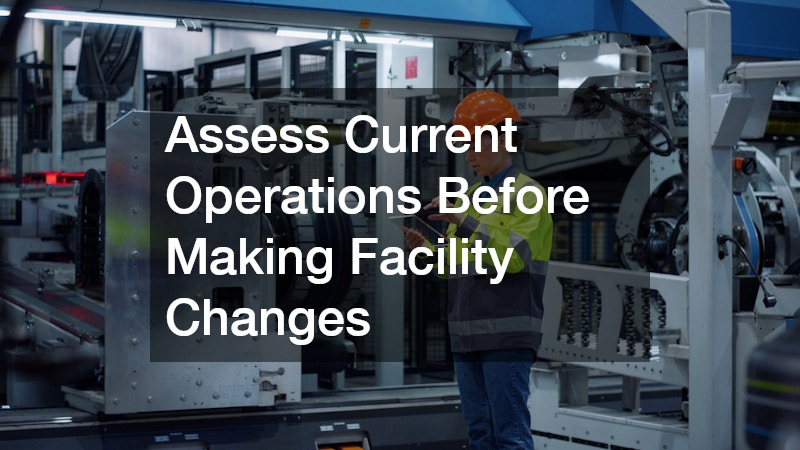
Before owners spend money on upgrades, they need a clear picture of what is actually happening inside the business each day. A facility may look fine during a quick walk-through, but the real problems often show up during busy hours, closing routines, deliveries, inventory checks, or customer rushes.
The best place to begin is with observation. Watch how employees move. Notice where they slow down, double back, or improvise. Look at where supplies pile up. Pay attention to corners that become catch-all spaces. Ask where accidents nearly happen, even if they have not happened yet. These details often reveal more than a formal report.
A small retail operation, for example, might discover that its checkout area is too close to the front entrance. Customers entering the store interrupt the line, employees feel crowded, and displays near the door are constantly bumped. A service business might realize that technicians lose time every morning because tools, parts, and paperwork are stored in separate areas.
A useful facility audit should include:
- Customer flow from entry to exit
- Employee movement during normal and peak hours
- Storage capacity and organization
- Lighting, flooring, and visibility concerns
- Delivery access and loading areas
- Security gaps and blind spots
- Emergency exits and safety procedures
- Maintenance issues that keep returning
Risk planning belongs in this conversation as well. As a company grows, business insurance needs can change. A larger inventory, new equipment, public access areas, added employees, or expanded services may all affect exposure. Facility planning should include a review of whether coverage still matches the current operation, not the version of the business that existed three years ago.
Some businesses also have very specific security and layout needs. A pawn store, for instance, must think carefully about customer visibility, secure display areas, restricted employee zones, transaction counters, cameras, lighting, and controlled access to valuable inventory. Poor planning in that setting can create both operational friction and security concerns.
The same principle applies across industries. Every business has its own pressure points. A smart plan begins by identifying them honestly before choosing improvements.
Improve Visibility and Customer Access From the Outside In
Facility planning often starts inside the building, but customers begin forming opinions before they ever walk through the door. The exterior tells people whether a business is easy to find, safe to enter, and organized enough to trust.
Visibility is not only about appearance. It affects revenue. A business that is hard to see from the road, confusing to enter, or difficult to navigate may lose customers without ever knowing it. People may drive past, park somewhere else, or choose a competitor that feels easier.
A business sign plays a practical role in this process. It should be readable from the right distance, placed where customers naturally look, and consistent with the business’s brand. A faded, blocked, poorly lit, or undersized sign can make even a strong company feel neglected. Owners should evaluate signage during daytime, evening, and bad weather. What looks clear at noon may disappear at dusk.
Customer access deserves the same attention. Parking areas, sidewalks, doors, ramps, and entry points should support a smooth arrival. If customers need to guess where to park or which entrance to use, the facility is already creating friction. That friction matters even more for businesses that serve families, older adults, contractors, delivery drivers, or people carrying equipment.
Storage can also affect customer-facing areas. When a company runs out of room, public spaces often become unofficial overflow zones. Boxes appear near counters. Seasonal equipment crowds hallways. Old files fill rooms that could serve customers or staff. In some cases, self storage units can offer a practical short-term solution while a business reorganizes, renovates, or transitions through a growth period.
The key is to avoid using off-site storage as a way to delay better planning forever. It should support the operation, not hide deeper inefficiencies. Items that are needed weekly should probably be stored on-site. Items used seasonally, archived records, event materials, backup fixtures, or temporary overflow may be better candidates for outside storage.
A simple exterior planning exercise can help owners see the property through a customer’s eyes:
- Drive past the business from both directions.
- Park where a first-time visitor would park.
- Walk to the entrance without using employee knowledge.
- Notice unclear signs, dark areas, cracked pavement, or blocked paths.
- Enter the building and identify the first thing customers see.
This exercise often reveals issues that employees no longer notice. A cluttered window, a confusing entrance, or a dim walkway may feel normal to staff but send the wrong message to visitors.
Invest in Durable Building Components That Reduce Future Costs

Every facility has parts that take more abuse than others. Doors, floors, counters, loading areas, shelving, restrooms, and entryways often show wear first because they carry the weight of daily operations. Choosing cheaper materials may save money upfront, but repeated repairs, downtime, and safety risks can cost more over time.
Durability should be viewed through the lens of use. A quiet office does not need the same components as a warehouse, commercial kitchen, clinic, or lodging property. The right choice depends on how many people use the space, what equipment moves through it, how often cleaning is required, and what kind of security is needed.
Industrial doors are a good example. In facilities with loading zones, service bays, storage rooms, or high-traffic work areas, doors do more than open and close. They affect temperature control, security, workflow, noise, safety, and energy use. A poorly selected door can slow deliveries, create drafts, break down under repeated use, or expose valuable inventory.
The same thinking applies to hospitality and multi-room facilities. Reliable hotel door suppliers can help businesses choose products that balance durability, privacy, fire ratings, guest experience, hardware compatibility, and long-term maintenance. A door that looks good on installation day but fails under constant use becomes a recurring operational problem.
Owners should ask better questions before approving building components. Instead of asking only, “How much does it cost?” they should ask:
- How often will this be used each day?
- Who will use it: customers, employees, vendors, or all three?
- What happens if it fails?
- How easy is it to repair or replace?
- Does it improve safety or security?
- Will it still work if the business grows?
- What maintenance will it require each year?
This kind of thinking helps prevent false savings. A low-cost fixture in a low-use area may be perfectly reasonable. A low-cost fixture in a critical work zone can become expensive quickly.
Employees also notice when they are expected to work around broken, flimsy, or poorly designed building features. A back door that sticks every morning, a storage area that never locks properly, or a loading zone that floods during rain tells employees that inefficiency is accepted. Over time, those details shape workplace culture.
Stronger materials and better components do not need to be flashy. In many cases, the best investments are the ones customers never think about because they simply work.
Build Strong Vendor Relationships Before You Need Them
Facility planning is not only about the building. It is also about the network of suppliers and vendors that keep the business moving. When those relationships are weak, even a well-designed space can run into problems.
Many owners do not think seriously about vendors until there is an urgent need. A cooler fails. Shelving breaks. A renovation starts. Inventory runs low. A storm damages part of the property. Suddenly, the business needs fast answers from companies it has never worked with before. That is when delays, pricing surprises, and communication problems become painful.
Strong vendor relationships should be built before pressure hits. This is especially important for businesses that rely on physical goods, frequent deliveries, specialized materials, or regulated environments.
A restaurant, for example, cannot afford unreliable restaurant supplies. If basic items are delayed, the kitchen may need to adjust menus, disappoint customers, or send staff scrambling for last-minute alternatives. A contractor or facility manager dealing with construction materials delivery faces a similar issue. If materials arrive late, arrive damaged, or show up at the wrong time, labor schedules and project timelines can fall apart.
Reliable vendors help businesses plan with more confidence. They understand delivery windows, site limitations, seasonal shortages, product substitutions, and ordering patterns. Over time, they become part of the company’s operating rhythm.
A practical vendor strategy should include a primary supplier, a backup supplier, and a clear internal process for ordering. It should also identify which items are mission-critical. Not every supply delay creates the same level of risk. Running out of office pens is inconvenient. Running out of packaging, repair parts, safety materials, food-service essentials, or job-site materials can stop work.
Communication matters as much as pricing. A slightly cheaper vendor who is hard to reach may cost more in wasted time and missed deadlines. Owners and managers should track whether vendors respond quickly, explain delays honestly, provide accurate invoices, and understand the business’s needs.
One useful approach is to review vendor performance quarterly. This does not need to be complicated. Managers can ask:
- Were deliveries accurate?
- Were timelines reliable?
- Were substitutions communicated clearly?
- Did pricing remain consistent with expectations?
- Did vendor issues create staff overtime or customer delays?
- Is there a backup option for critical items?
This process gives facility planning a stronger foundation. Renovations, expansions, repairs, and routine operations all become easier when the business is not starting from scratch every time it needs outside help.
Plan Renovations With Long-Term Growth in Mind

Renovations often begin with an immediate problem. The lobby feels dated. The storage area is too small. The flooring is worn. The break room no longer fits the team. The production area is crowded. Fixing those problems is important, but a renovation that only solves today’s issue may become outdated too quickly.
Long-term planning asks a deeper question: What will this business need from the space in three, five, or even ten years?
That does not mean every owner must overbuild or overspend. It means decisions should leave room for change. A flexible floor plan, extra utility capacity, stronger surfaces, better storage design, and adaptable work zones can help a business grow without tearing everything apart again too soon.
Material choices play a major role. Lumber may be used in framing, shelving, displays, counters, partitions, or built-in storage, depending on the type of facility. The right grade, treatment, and installation method matter because commercial use is different from light residential use. A shelf that works in a home garage may not hold up in a busy stockroom.
Concrete is another common material that deserves thoughtful planning. Floors, pads, ramps, walkways, loading areas, and foundations all depend on proper design and installation. Cutting corners can lead to cracking, drainage issues, uneven surfaces, and safety concerns. In high-traffic areas, surface durability and maintenance needs should be part of the early conversation, not an afterthought.
A business planning a renovation should think beyond appearance. Looks matter, but operations matter more. A beautiful front area that creates a bottleneck is not a successful improvement. A polished workspace with too few outlets, poor storage, or narrow pathways will frustrate employees after the excitement fades.
Before finalizing plans, owners should walk through future scenarios. What happens if sales increase by 25 percent? What if the team doubles? What if deliveries become more frequent? What if customers expect faster service? What if new equipment is needed? These questions help reveal whether the renovation is truly supporting growth or simply refreshing the surface.
Renovation planning should also include downtime. Many businesses underestimate the disruption caused by dust, noise, blocked entrances, limited parking, or unavailable rooms. A phased schedule can help. Work may need to happen after hours, during slower seasons, or in sections that allow the business to keep operating.
For some companies, the smartest renovation is not the most dramatic one. It may be widening a delivery path, reinforcing a floor, improving drainage, adding storage, reworking employee stations, or replacing materials that constantly fail. These changes may not photograph well, but they can make the business stronger every day.
Connecting Facility Decisions to Better Daily Performance
Smarter facility planning works best when it is tied to everyday business goals. A building should help the company serve customers, protect employees, manage inventory, receive deliveries, control costs, and adapt to change. When it does not, the facility becomes a quiet source of friction.
The most effective owners and managers learn to notice the small signs. A hallway that is always blocked. A counter where paperwork piles up. A storage room no one wants to enter. A delivery door that causes delays every Friday. A customer entrance that feels unclear. A staff area that no longer fits the team. These are not just annoyances. They are clues.
Improving a facility does not require guessing. It requires listening, observing, and planning with intention. Employees often know where the problems are because they deal with them daily. Customers reveal issues through confusion, complaints, hesitation, or repeated questions. Vendors notice access problems and timing challenges. Maintenance records show which parts of the property keep demanding attention.
A business that gathers those insights can make better decisions. Instead of reacting to each problem separately, it can identify patterns. Maybe the issue is not that employees are disorganized, but that storage is poorly located. Maybe customers are not ignoring directions, but the entry sequence is unclear. Maybe repairs are not random, but the result of materials that were never suited for the level of use.
Smarter facility planning also helps owners spend money with more confidence. Not every upgrade deserves priority. The strongest investments usually support safety, efficiency, customer trust, asset protection, or future flexibility. Cosmetic improvements can be valuable, but they should not distract from deeper operational needs.
As businesses grow, their spaces must evolve with them. What worked in the early stage may not work once customer volume increases, inventory expands, equipment changes, or staffing grows. Regular facility reviews help prevent the building from holding the company back.
The goal is not perfection. Every facility has limits. The goal is alignment. When the physical space supports the way the business actually works, operations feel smoother. Employees waste less time. Customers feel more confident. Repairs become more predictable. Growth becomes easier to manage.
A well-planned facility does not call attention to itself. It simply makes the business work better. That quiet strength is exactly why it matters.