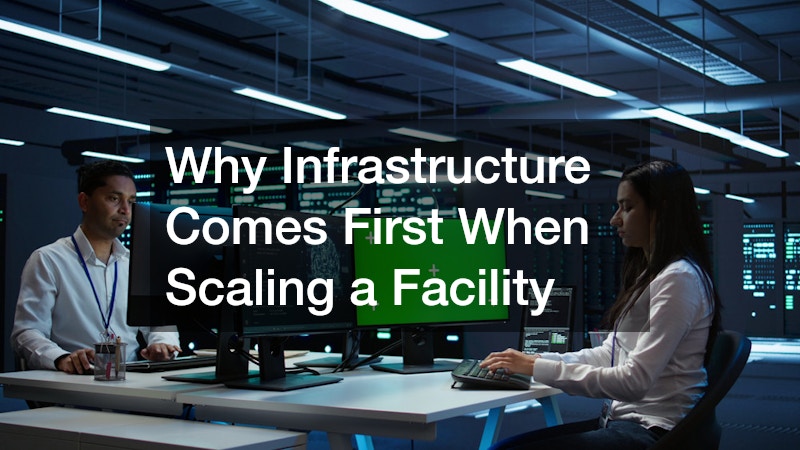
Scaling a business operation requires far more than simply hiring additional staff or increasing inventory levels. When executives plan an expansion, the natural tendency is to focus on revenue-generating assets and marketing efforts. However, expanding physical operations without first evaluating the underlying framework leads to severe operational bottlenecks, costly retrofits, and catastrophic downtime. A facility is only as capable as the system supporting its operations. Prioritizing physical infrastructure ensures that every subsequent growth phase rests on a secure, scalable foundation.
Long-term strategic planning relies on anticipating operational shifts five to ten years into the future. Facilities that expand incrementally without an overarching structural master plan often suffer from fragmented utility layouts and inefficient workflows. By establishing clear utility corridors and load profiles from day one, leadership teams avoid the logistical nightmare of tearing up active production floors to retrofit high-capacity power or water lines down the road.
- Conduct a thorough load audit across all mechanical, electrical, and fluid systems before approving architectural blueprints.
- Establish dedicated utility chases to streamline future capacity expansions without disrupting daily output.
- Align facility scaling timelines directly with long-term enterprise growth milestones and financial projections.
Assessing Load Capacities Before Adding Equipment
Before introducing heavy machinery or high-draw production lines to an existing footprint, a thorough assessment of electrical, structural, and spatial capacities must take place. Heavy machinery requires specialized power configurations, and attempting to operate high-draw equipment on standard commercial circuits invites breaker trips, equipment damage, and serious safety hazards. Engaging a skilled commercial electrician early in the planning process allows management to evaluate current panel capacities, audit transformer health, and upgrade main service drops. Upgrading power distributions in advance prevents expensive operational halts once new lines are set to launch.
Power quality is just as vital as total power capacity when integrating modern automated systems. Voltage sags, harmonic distortions, and transient surges can degrade sensitive programmable logic controllers and robotic components over time. Upgrading transformers, integrating power factor correction systems, and installing dedicated clean-power circuits ensures that continuous manufacturing processes run smoothly without unexpected digital glitches or component degradation.
- Perform detailed thermal imaging scans on distribution panels to identify hidden resistance points before connecting new equipment.
- Calculate peak voltage demands rather than relying on average consumption metrics to prevent circuit overloads.
Designing Water and Drainage Systems for High Volume
Water supply and wastewater disposal are foundational requirements that are notoriously difficult to alter after concrete has been poured and walls are erected. Expanding operations often increases water consumption and liquid waste production significantly. Partnering with a licensed commercial plumber guarantees that supply lines maintain adequate pressure and that drainage systems meet local regulatory codes for volume and grease management. Upgrading sub-surface pipes and installing commercial backflow preventers before increasing production prevents structural flooding, regulatory fines, and unexpected shutdowns.
- Size drainage lines to accommodate emergency flush scenarios and peak operational liquid volume simultaneously.
- Schedule regular maintenance to keep internal lines free of mineral scale and organic build-up.
- Install secondary containment pits along outflow channels to catch hazardous chemical spills before municipal discharge points.
Securing On-Site Energy and Auxiliary Power Supply
Industrial facilities rely heavily on uninterrupted power and heating sources to maintain continuous manufacturing or climate-controlled environments. Depending solely on standard utility grids leaves high-volume facilities vulnerable to rolling blackouts and localized power grid strains. Contracting with commercial and industrial propane services ensures access to reliable backup generation, bulk fuel storage, and specialized heating solutions tailored to massive square footage. Establishing dedicated fuel reserves on-site insulates operations against energy price spikes and grid outages, keeping production schedules intact during extreme weather events.
Building and Structural Enhancements
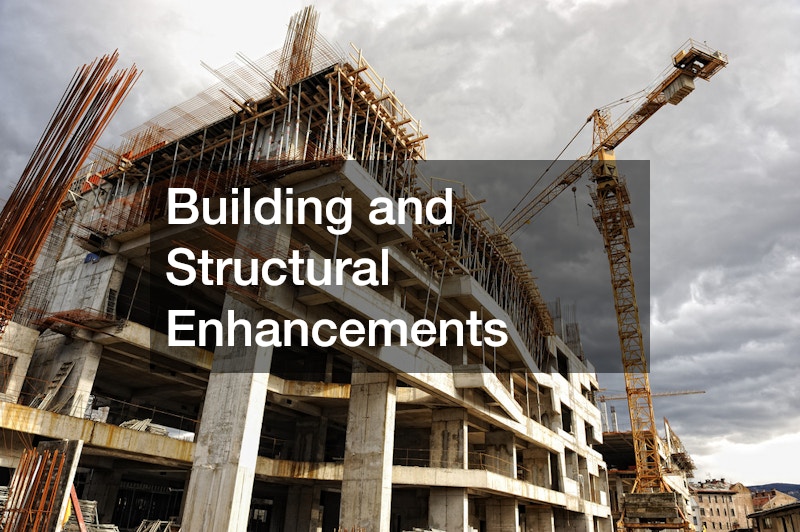
Physical expansion often requires altering the envelope of the facility itself or erecting new structures entirely. The structural integrity of a building determines how well it accommodates heavy overhead cranes, dense pallet racking, and specialized environmental controls. Rushing structural modifications without a comprehensive blueprint compromises safety and exponentially increases construction timelines. Building for growth requires robust materials and precise execution.
- Opt for clear-span building designs that eliminate interior support columns across primary assembly zones.
- Design overhead ceiling trusses with extra load capacity to support future crane installations.
- Select industrial-grade floor coatings that resist heavy impact, oils, and harsh sanitizing chemicals.
Accelerating Construction Timelines with Modern Panel Fabrication
When time-to-market is critical, traditional steel and block construction can introduce severe delays due to material lead times and complex assembly processes. Utilizing tilt up construction allows development teams to pour reinforced concrete wall panels directly on the project site and raise them quickly into place with heavy cranes. This method provides superior thermal efficiency, exceptional structural durability, and unmatched fire resistance, giving industrial facilities a rigid shell that easily handles external weather conditions while expediting overall build schedules.
Standardizing Concrete Pours for Massive Load Bearing
Industrial floors must withstand the relentless pressure of heavily loaded forklifts, automated guided vehicles, and dense racking networks. Poorly poured or improperly cured concrete leads to surface spalling, structural cracking, and dangerous floor unevenness. Utilizing specialized concrete pumping services allows builders to place precise, high-density concrete mixes into hard-to-reach areas, foundation footings, and expansive floor slabs with minimal cold joints. Achieving a uniform, high-strength concrete floor guarantees that high-density storage equipment can be installed safely without risk of slab failure.
- Utilize laser-guided screeds during placement to meet strict floor flatness and levelness specifications.
- Implement extended curing protocols and vapor barriers beneath the slab to eliminate moisture migration.
Protecting Structural Investments with Commercial Roofing Upgrades
The entire internal infrastructure of a facility remains vulnerable if the building envelope is compromised by water intrusion. Expanding a facility often means joining new roof structures to existing ones, creating delicate seams that are highly susceptible to leaks. Hiring experienced local commercial roof contractors ensures that seamless membrane systems, adequate drainage slopes, and robust flashing are installed correctly. Protecting internal capital assets, expensive electronics, and inventory requires a roof built to withstand extreme weather, hail impacts, and persistent UV exposure.
Site Access, Perimeter, and Grounds Management
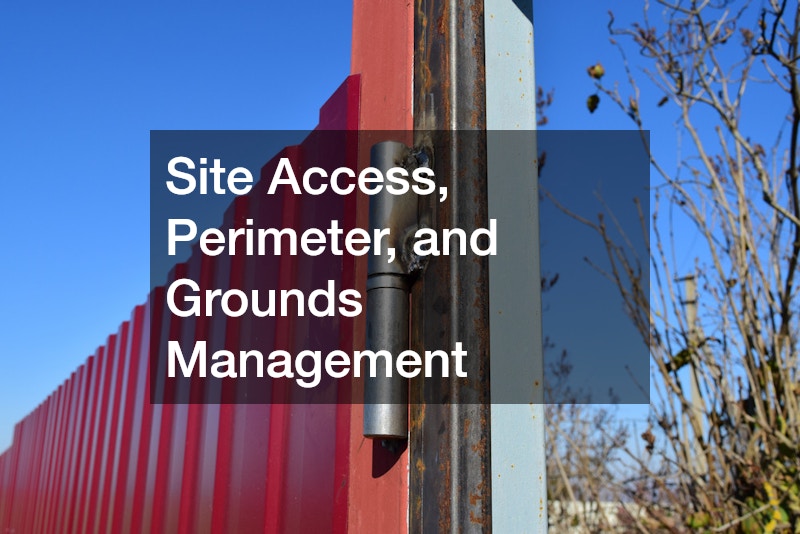
Scaling operations increases vehicle traffic, employee foot traffic, and overall facility security risks. Infrastructure extends beyond the exterior walls of the facility to include parking lots, truck staging yards, automated perimeters, and surrounding grounds. Without structured site management, logistics bottlenecks occur at entry points, leading to surrounding traffic congestion and security vulnerabilities.
- Designate separate routing lanes for incoming freight, passenger vehicles, and pedestrian footpaths.
- Illuminate all peripheral driveways, loading docks, and walkways with high-output LED fixtures.
- Construct dedicated staging yards to prevent freight trailers from backing up onto commercial access roads.
Automating Perimeter Access to Manage Heavy Vehicle Traffic
As daily logistics volume scales, managing the influx of freight carriers, service vans, and employee vehicles manually becomes an operational bottleneck. Installing automated gate services allows security teams to regulate vehicle flow, verify driver credentials through digital check-in systems, and record traffic metrics automatically. Implementing heavy-duty cantilever gates and high-speed barrier arms prevents unauthorized entry, protects valuable site inventory, and keeps freight movement organized during peak operating hours.
Installing Commercial Irrigation Systems for Efficient Property Care
Maintaining the grounds surrounding a large facility is vital for municipal compliance, corporate identity, and storm runoff management. Expansive commercial footprints often include retention basins, green buffer zones, and extensive landscaping that require significant water volumes. Investing in professional commercial irrigation installation ensures that smart controllers, weather sensors, and drip lines are integrated efficiently across the property. Proper irrigation prevents soil erosion around concrete pads, maintains property values, and minimizes water waste by adjusting schedules based on real-time atmospheric conditions.
External Water and Environmental Utilities
Facilities operating outside densely populated municipal zones often lack direct access to city water mains capable of supporting high-demand industrial processes or extensive fire suppression systems. Developing self-sustaining water infrastructure is crucial for operational independence and regulatory compliance.
- Construct dedicated secondary holding ponds to catch storm runoff and recycle water for non-critical procedures.
- Secure all necessary regional environmental permits and water extraction rights well before breaking ground.
Drilling High-Capacity On-Site Wells for Industrial Processes
When municipal water connections are either unavailable or cost-prohibitive for high-volume consumption, tapping into subterranean water resources becomes necessary. Partnering with a licensed well driller ensures that deep aquifers are properly surveyed, drilled, and cased to provide a reliable, high-capacity water source. On-site wells give facilities complete control over their water supply, insulating production lines from municipal rationing, sudden rate hikes, and localized utility pipe bursts.
Maintaining well longevity requires ongoing hydrological monitoring and preventative mechanical care. Deep-well submersible pumps operate under extreme pressure and constant usage, making routine vibration testing and amperage audits necessary to spot early motor wear. Monitoring static and pumping water levels over time ensures that extraction rates remain sustainable without damaging the underlying aquifer structure.
- Install dual-redundant submersible pump assemblies within primary wells to prevent operational downtime during pump repairs.
- Encase well heads in secure, climate-controlled utility sheds to prevent freezing and surface water contamination.
Installing Advanced Water Treatment and Storage Capabilities
Raw groundwater must often be treated, filtered, and stored in large holding tanks before entering processing plants or fire sprinkler systems. High-capacity pumps, filtration units, and pressure tanks must be oversized during initial installation to accommodate future expansion phases. Investing in scalable water management infrastructure ensures consistent water quality, protects sensitive processing equipment from mineral scaling, and guarantees adequate reserve volumes for emergency fire suppression systems.
Asset Relocation and Final Commissioning
The final stage of facility scaling involves moving sensitive machinery, inventory, and administrative assets into the newly constructed or expanded space. Transitioning operational equipment without a clear infrastructure roadmap risks damaging expensive assets and prolonging operational downtime.
- Establish clear chain-of-custody documentation for sensitive intellectual property and calibrated tools.
- Coordinate utility disconnects and reconnects to minimize idle time for specialized production crews.
- Pre-mark exact machine footprint zones on dock floors to streamline rigging and positioning procedures.
Coordinating Complex Industrial Relocations Seamlessly
Relocating delicate machinery, heavy tool dies, and sensitive server racks from an old site to a newly expanded facility requires specialized logistics planning. Working alongside an experienced local business moving company allows facility managers to schedule staggered equipment transitions that minimize total operational disruption. Professional industrial movers utilize heavy rigging, air-ride transportation, and climate-controlled vehicles to ensure that critical manufacturing assets arrive safely and on schedule.
Conducting Pre-Commissioning Audits Across All Utility Systems
Before flipping the master switch on a newly expanded facility, every infrastructure system must undergo rigorous testing under simulated full-load conditions. Verifying system balance prevents surprise component failures during actual production runs.
- Verify electrical balance across all distribution panels using thermal imaging to detect hot spots.
- Test backflow assemblies, main shutoff valves, and high-volume drainage lines under maximum pressure.
- Check perimeter security systems, access card readers, and automatic gate sensors for continuous operation.
- Inspect primary roof membranes, internal downspouts, and site drainage paths for potential leak risks.
- Monitor fuel delivery lines, propane regulators, and auxiliary generator auto-transfer switches.
By executing a methodical pre-commissioning checklist, facility managers ensure that all mechanical, electrical, and structural components work in unison, protecting the business from immediate operational hiccups.
Scaling a facility is a strategic milestone that reflects strong business growth, but long-term success hinges on the strength of the underlying physical assets. Prioritizing electrical capacity, structural integrity, site security, and auxiliary utilities prevents costly operational pauses and eliminates the need for expensive structural retrofits down the road. When business leaders build with scalable infrastructure in mind, they create a resilient, adaptable environment capable of supporting continuous expansion, operational efficiency, and sustainable profitability for years to come.